Twenty years taking vague, high-stakes goals and turning them into structured plans, aligned teams and delivered results, inside large regulated companies and from zero as a founder. I'm AI-native: I use Claude and agentic tools every day and build real products with them end to end. This is my application for AI Transformation Lead at Pencil, the part of the work I most want to do next.
Builder, not just adviser
The role structures messy client problems into workstreams, moves clients past pilots into real AI workflows, and codifies what works into reusable Blueprints. That's the shape of my last decade. Here's how it lines up, point for point with your posting.
My instinct with a vague goal is to break it into hypotheses, decide what we'd need to believe for it to work, and turn that into a few clear workstreams with owners and tests. It's how I've built every venture and growth plan I've run.
Proof: built the full go-to-market for WePractice on a hypothesis-and-data approach; ran early validation to scale-up across several Sparrow Ventures startups.
The hard part isn't the pilot, it's getting a working idea adopted as the way the team actually operates. I've led that change inside large, slow, regulated companies and made new things stick, not just demo well.
Proof: as Intrapreneur at Die Mobiliar (a major insurer), took products from MVP to launch; now lead AI-driven business models at Swiss Post from idea to roadmap.
Twenty years of running complex, cross-functional work to a deadline: internal teams, agencies and external partners pointed at one outcome, with budget and KPIs on me. Aligning a mixed group around a single plan is the part I'm best at.
Proof: founding team that grew WePractice to 23 people across 10 locations; led cross-functional delivery and external agencies at ifolor, reporting to C-level.
You want daily AI use and agentic fluency, with prototyping and code-reading a plus. That's not aspirational for me, it's how I work. I lead AI business models by day and build my own products end to end with AI, including this site. I read the code, wire up the automations, and ship.
Proof: AI Project Lead at Swiss Post; built the Pedal Peak platform and smedium studio end to end with Claude, agentic workflows and n8n.
I'm comfortable being the person in the room with senior clients: owning the relationship, the narrative and the hard conversations, without needing a partner to hide behind. That's how I've worked with large institutions and C-level for years.
Proof: owned the UBS and Baloise partnerships at Brixel as the main bridge to senior client stakeholders; reported to C-level at ifolor.
I don't like solving the same problem twice. When something works I write it down as a repeatable process the team can run without me, and I feed what I learn back into the product. That instinct to systematise is exactly the Blueprint job.
Proof: built repeatable growth and GTM processes reused across multiple Sparrow startups; STEM-adjacent base, BBA plus CAS in Innovation and Digital Marketing.
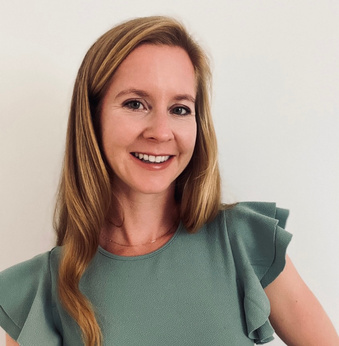
Transformation and growth lead in Zurich with twenty years of experience, open to relocating. I turn ambiguous goals into structured plans, aligned teams and measured results, increasingly with AI at the centre of the work. German and Swiss German native, English fluent, French conversational.
Jan 2026 to present
Swiss Post, Advertising · Zurich
Oct 2024 to Jul 2025
Ifolor Group · Zurich
Jun 2023 to Sep 2024
Brixel · Zurich
Mar 2020 to May 2023
WePractice · Sparrow Ventures (Migros Group) · Zurich
Sep 2019 to Sep 2022
Sparrow Ventures · Zurich
Jan 2017 to Aug 2019
Die Mobiliar · Bern
Not buzzwords. The method I'd actually use on a Pencil client, laid out as a Blueprint: frame the ambiguity, split it into workstreams, design the repeatable process, then codify it so the next engagement starts ahead. Figures here are illustrative placeholders; the questions and the structure are real. Click through the four stages.
A client says "we want AI in our creative process". That's a wish, not a plan. I'd start by turning it into a sharp problem statement and the few things that have to be true for it to work, so we're solving the real constraint, not the loudest symptom.
The gap that matters: the value is obvious, the readiness isn't. So the engagement is mostly change management, not tooling. That framing decides everything that follows.
Not a list of everything. Two or three workstreams that carry the outcome, each a hypothesis with a way to prove it, so we double down on what works and quietly kill what doesn't.
Pick a single high-volume creative workflow and run it fully on Pencil with the client's own team, so the saving is real and felt, not a demo.
Set the guardrails, brand rules and sign-off that let people use AI without fear. The thing that turns a pilot into something legal and brand will actually allow at scale.
Train the team, redesign the process around the tool, and move it from "the AI experiment" to simply how work gets done. This is where change usually dies, so it gets real ownership.
My job is to work myself out of the engagement: leave behind a repeatable AI process the client runs without me. Click each stage to see what it does and who I'd hand it to.
The point of doing it once well is doing it faster the next time. I'd write the engagement up as a reusable Blueprint and feed the rough edges back to product. Illustrative targets, but this is the artifact I'd commit to.
A Blueprint isn't a case study for the website. It's the working kit the next consultant opens on day one, plus a clear signal to the product team about what to build so the next client needs less hand-holding.
Roughly how I'd spend my first three months as AI Transformation Lead: learn the platform and the accounts cold, run a first engagement to a real result, and leave behind the first Blueprint.
I'd rather be honest than oversell. I haven't come up through a tier-one strategy consultancy, and I'm not an engineer: I read code, prototype and wire up automations, but I don't write production software, and deep SQL is a working skill for me, not a deep one. If the role needs a former McKinsey associate who codes, I'm not quite that profile.
What I am is rarer for this job: someone who has actually led change to completion inside large, slow organisations and from zero as a founder, and who genuinely lives in AI tooling, Claude and agentic workflows every day, building real things with it. Most transformation people can do one or the other. I'd bring both to your clients, and I'd love to talk about whether that's the trade you want.